Small Conceits

Musings. Stories. Poems.


Leave a comment >

Quinn-Sensei <demonstrating, with Chris taking ukemi>: “You want to get their hand and expose their wrist so that they…”

Chris wickedly doesn’t go down, preventing Quinn from finishing his instructions.

Quinn <twisting harder>: “Hey! I said so that they…”

Chris smirks and subtly messes with Quinn’s defense.

Quinn <breathing in and finishing the move — and his sentence> “…don’t have anywhere to go but down.”

Quinn pauses, signals Chris to stand up again. Chris complies.

Quinn: “So, again…get their wrist exposed and turn them…”

Chris <shouts & drops, laughing>: “OK, you got me that time.” <shakes his hand to stop the tingling>

Doug <raising his hand from the sideline>: “Sensei, I don’t think I quite got that. Can you do it again?”

Quinn: “Sure. You’re with me.”

Doug <opens & shuts his mouth, smirk sliding from his face>: “OK, that didn’t go as planned…”


Leave a comment >

First, a bit of background, from the dojo handbook:

“Ukemi: Techniques of falling. The art of protecting oneself from injury.”

——

Joe-Sensei: “OK, so I want you to stay loose. Uke can do anything they want to you. You have to stay loose to be responsive.”

Doug knits his brow, opens his mouth, then shuts it again.

Joe: “Doug, you have a question?”

Doug: “I was just thinking it’s like marriage. You never know when they’re gonna attack, or why. They just come right at you, and you have to figure out how to roll with it to keep from getting clobbered.”

Class laughs.

Doug: <shifting a little uncomfortably> “Katie would kill me…”

Joe: <not missing a beat> “OK, everyone! Marriage ukemi. Go!”


Leave a comment

In the Land of Giants: Sugar Bowl Trail, 2012

It’s hard to believe it was three years ago that I hopped a plane on a whim and flew to Fresno, CA, to visit with a friend and hike Kings Canyon National Park. In fact, it is almost to the day. I wrote this back then and posted it elsewhere, trying to make sense of all the teeming emotion I’d felt on that ridge. Standing among the redwoods and sequoias stirred something in me that I thought had died. It’s been a long waking, but I am finally opening my eyes again.

The ridge is the only place where I struggle to breathe. The altitude is part of it — I’m approaching 7,000 feet — but it’s mostly the exertion of climbing switchback after switchback to a grove called The Sugar Bowl. The way is sometimes open and rocky, sometimes overhung with twisted, stunted oaks and a few pines of various species. There are overlooks here and there, previewing tomorrow’s climb: the Big Baldy Trail. Silver-leafed brush reaches out and tugs at my boots, and I watch for rattlesnakes because, yes, diamond-backs are sometimes spotted even at these elevations.

Big Baldy is a silent, impersonal presence off my left shoulder. He peers through the trees at me where they open to reveal his pate. I’ve seen only two other humans on the trail — a young, energetic couple climbing down the switchbacks I’m ascending — and the effect is of having the park to myself. Kings Canyon National Park is an archipelago of park lands, interrupted in places by seas of national forest land and wilderness areas. It abuts Sequoia National Park, its sister park, a little south of where I’m hiking. But only the maps know the boundaries. From where I stand at that moment, they don’t matter, except that they protect this slice of the Sierra Nevada from logging, cattle, and development.

The trail bends around a rise and disappears into the forest ahead. I turn with it and enter the Sugar Bowl Grove.

There are two hikes I’ve taken in my life whose beauty has literally brought me to my knees. This is one of them.

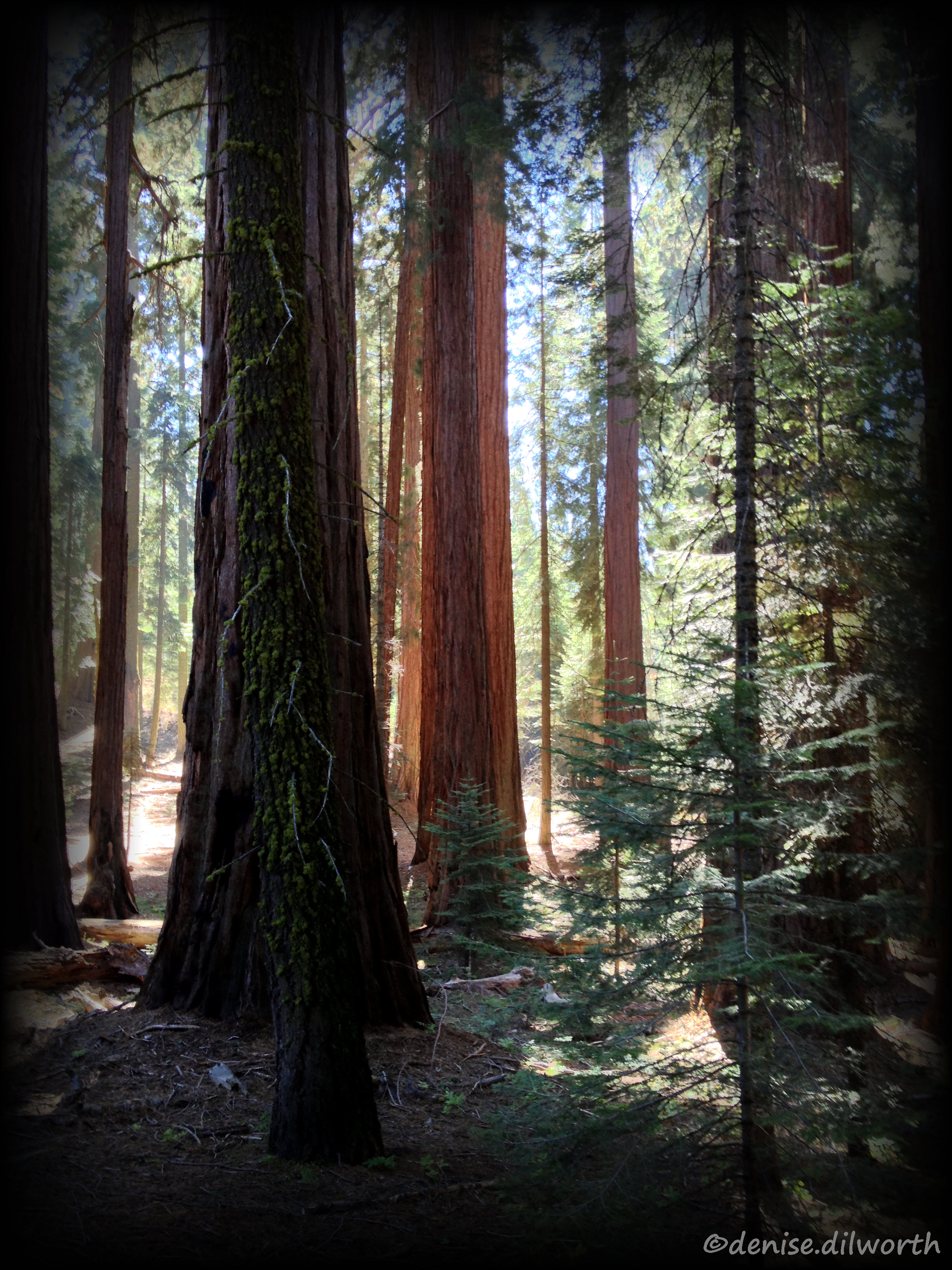
I have entered a pristine grove of sequoia topping Redwood Mountain. It lacks the well-mannered, museum feeling of Grants Grove, where the third-largest sequoia — the General Grant Tree — and his massive neighbors are safely corralled behind fences, apart from the scores of tourists who visit every year. This grove is a riot of growth. Among the huge sequoias grow redwoods, white pine, ponderosa pine, red and white fir, and the sugar pine for whom (I think) the trail is named. Generations of sequoia stand together: tiny seedlings, slender saplings, cone-shaped adolescents, and ancient giants, some of which are more than a thousand years old.

I’m dumbstruck as I fumble with my camera, pointing my lens this way and that, trying to find something on which to focus. I can find no way to capture what I see, what I’m experiencing here. How do I record the depth? The light? The greens, sages, cinnamons, golds? How do I convey the enormity of the towering giants surrounding me, sheltering their growing legacies, reaching roots deep into the soft soil? By what means can I bring back with me the scent of cinnamon seeping from bark warmed by the golden afternoon light? I simply can’t. But I snap photos anyway, tears streaming down my face.

Looking up into the treetops, the beauty is almost painful.

When I finally continue on the trail, walking deeper into the woods, I am shaken. It’s difficult to breathe again, but not because the walk is strenuous — it isn’t — and not because the air is thin. I’m still gasping from the awe of the place I’m leaving behind me, one heavy, regretful step at a time.

Grove of sequoia and redwoods


Leave a comment

Feed

the moon changes tides,
feeds vampire energy —
hot tongue on bare skin
raw, frantic, panting crush of power
delirious, moaning blood wisdom

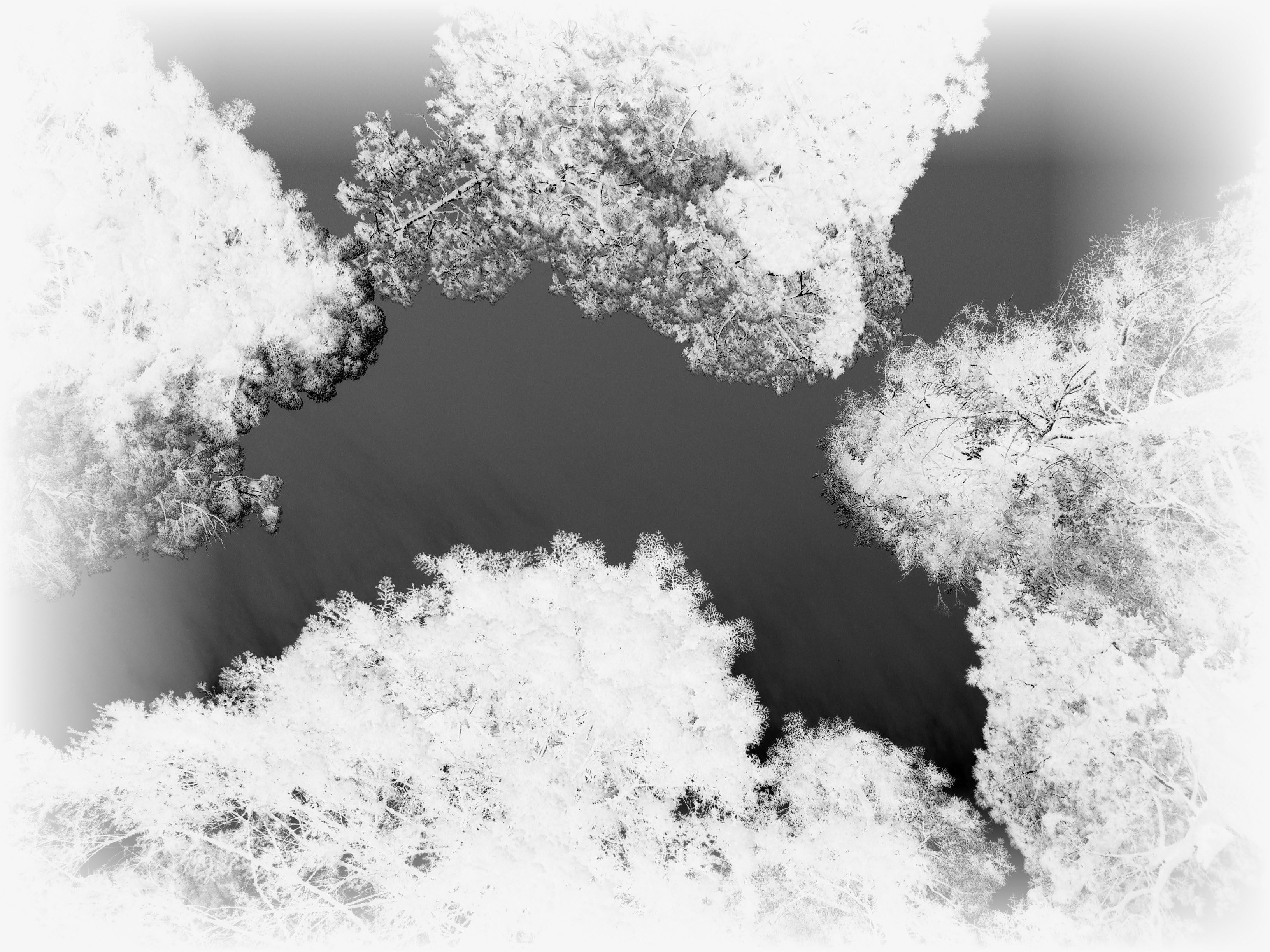
inverted black & white looking up through trees


Leave a comment

The Vinegar Tasters

Frank and I face off. I move quickly toward him, a wooden practice knife — or, tanto — gripped firmly in my right hand. At the last moment before I enter Frank’s space, I playfully switch the tanto to my left hand and jab him lightly in the ribs, throwing off his defense and forcing him to adapt his technique. Frank laughs and smiles that brilliant, open smile of his. “Thank you!” he exclaims, with a twinkle in his eye. He has accepted what was given him and learned something from the exchange.

For about a year, I trained in aikido, a Japanese martial art brought to this country back in the 1970s by a man named Mitsugi Saotome. Aikido was appealing to me on a number of levels, but it was how my fellow dojo-members — especially my teachers — responded to the practice that made it feel somehow right for me.

When the technique’s essence is captured, and the uke (attacker) finds him- or herself hitting the mat, there is almost always a smile, a laugh, a congratulatory “Yes!” or “Nice!” to the nage (defender). The energy in the room was light, playful, happy. And, yet, we were engaged in attack and defense.

As I trained over those months, I had this funny, nagging bit of memory knocking at the back of my brain every time someone fell to the ground with a smile or a laugh. It finally broke through: The Three Vinegar Tasters.

The Three Vinegar Tasters is a painting that comes from Eastern tradition and its story goes something like this: Confucius, Buddha, and Lao Tzu are pictured around a vat of vinegar, which represents life. Each of the men has dipped his finger into the vat and tasted the vinegar, and his facial expression reflects the nature of his philosophy about life. Confucius wears a sour expression; Buddha’s grimace is bitter. Lao Tzu, however, smiles with an expression of “Ah, yes!” And why shouldn’t he?

Life is, after all, perfectly itself.

In my observations, martial artists can also be vinegar tasters. Certainly, some wear sour expressions as they practice. Some look angry or bitter. Many look as though the practice is a strain. But I somehow landed in with the smilers. So, in addition to feeling (especially on some Saturday mornings) like I’d just walked into a roomful of rowdy brothers, a pile of squirmy puppies, or a gang of otters at play, I also associated my dojo-mates’ smiles as they tumbled and rolled with the smile of Lao Tzu. There was an “Ah, yes!” expression on their faces as they learned from the energy they exchanged with one another. Any why wouldn’t there be?

That energy — attacking, defending, moving in agreement — is perfectly itself.

These are a few of the moments I captured and recorded after our Saturday morning training sessions. These people made me laugh, made me bruise, and brought me back into myself at a time when I felt so very, very lost. I am grateful to them all.


Leave a comment >

Fallow fields intrigue me. They have been plowed but are left unseeded for a while, resting. I always wonder:

Why is it resting? From what is it recovering?

Has it been abandoned?

And, perhaps, the most interesting of imaginings:

What will grow there next?

This space is not abandoned. Yes, I am resting.

Your guess is as good as mine as to what grows here next. Perhaps there are gardeners out there who would like to make suggestions?


Leave a comment

Denouement: Coyote’s Last Lesson

There are those who believe that the most intimate act in which we can participate is lovemaking. Two people entwined, giving and taking pleasure. Two souls engaged in call and response, drinking one another in, each expanding its own wholeness with the fullness of the other. It is in that moment, we are told, that we are our most vulnerable, exposed selves.

Her faint whine roused me from where I’d sat meditating off and on for most of the morning. As I unfolded my stiff legs and stood from my cushion, the whine deepened and became a ghostly moaning howl, low in volume but not in intensity.

“What do you need, sweetheart?” I asked her. Her eyes rolled toward me but didn’t quite fix on me. Her tail twitched and flicked like a cat’s. “Do you need to go potty?”

The moan softened to a high-pitched, breathy whine. I gathered her up in a towel and carried her to the backyard, where I clumsily struggled to balance her while she tried to relieve herself. We couldn’t manage it; her legs buckled, and although she had wasted away to a wisp, I couldn’t hold her steady enough.

But with wholehearted lovemaking, vulnerability is a choice. One’s loss of dignity in those moments of soulful passion is less a true loss than a mutual surrender, an abandonment.   

I carried her back to the porch and settled her on her bed, arranging her limbs and laying the sheep skin over her to keep her warm against the morning chill. She began crying again — that desperate almost-howl — as I went inside for padding and paper towels. I carefully folded and placed the toweling under her rear end, careful to move her tail out of the way. I went back inside for the moistened wipes I use to spot-clean the dogs’ fur, and by the time I returned she’d soiled the towels.

“I’ll keep you clean,” I promised as I replaced the padding and used the wipes. “I won’t let you leave here anything less than beautiful.” She quieted, and I returned to my meditation cushion.

My last two days with Coyote taught me that there is a kind of surrender more intimate than any lovemaking: The entwining of living memory and love with the needs and frailty of a fading life.In that place, there is no real choice. Surrendering one’s deteriorating body to the ministrations of another is, in fact, a loss of volition. There is no option but to trust. Vulnerability is a condition, not a gift.

Hours passed. I had been sitting with my notebook, distractedly scribbling disconnected fragments of poetry. The day was beautiful: sunny, cool, with a gentle breeze stirring the leaves in the trees. She’d been quiet for some time, so I picked up the water bottle and went to check on her. As I approached, I saw a thick, green puddle near her mouth. She whined — a raw, raspy sound — when she felt my step on the floor boards. Her eyes were partly open but empty. The dappled light moved sweetly across her face and the mess alike.

“Oh, Coyote,” I soothed. “I’m so sorry.” I gently cleaned her face and bedding and added pads under her nose, in case she vomited again. She could no longer lift her head, so I sprayed water into her mouth and waited for her to swallow. When her eyes sought out the bottle, I sprayed again and waited. We repeated this several more times until she stopped searching. That, I’d learned, meant she was done drinking.

Caring for the dying is yet another kind of surrender — one made, ironically, from a place of tender power. Attending to Coyote’s last needs meant entering into a kind of intimate agreement far different from the one made between lovers. Yes, it still made me feel raw, exposed, and vulnerable. But my agreement with Coyote was one of trust between an increasingly dependent being and her proportionately more powerful caregiver.  

As I leaned to kiss her cheek, a rush of anguish made me want to scoop her up in my arms and sob into her soft fur. I restrained myself, knowing she would hate the demonstration, but I couldn’t stop my tears as I gently stroked her still-beautiful coat. In the spaces between every breath, my heart wrestled with both the hope and the fear that she had gone. And, with every inhalation, it wrestled with the relief and despair that she had not.

“Please, baby,” I whispered. “Please go. There’s a breeze blowing. Ride it Home, Coyote. Leave this old, sick body here. Ride the breeze and run and play again. Become the light. Just let go.”

And, yet, it was an agreement we made with as much grace as we could gather from the depths of our friendship. I’d promised her I’d let her choose her death. Those last weeks were a test of my resolve. So many times, I was torn with self-doubt as I searched her eyes and studied her behavior for any signal that she wanted me to take over for her, take the choice away. But there were no such signals. So I let her lead me, one slow step at a time, down the spiral as her life unraveled. 

She swiveled her eyes, and they focused on me — just for a flickering moment. In them I saw the unquestioning trust and courage that kept me faithful to the promise I’d made her. My heart lifted, even as it broke, to be allowed to bear the dear burden she’d given me to carry.

Yes, I followed Coyote’s lead until we came to the place where I could go no farther — that place where she had to walk alone. And, at the threshold, our agreement was fulfilled. She went on. I turned to make the long climb back to where Bodhi waited for me among the living.


“Mom?”

“Oh baby, I’ve missed you. I’m so glad you’re here.”

“I…I just wanted to say…thank you.”

“For what, sweetheart?”

“You kept your word, even when things got so difficult. I didn’t think you’d be able to do it. I thought you’d give up.”

“I wanted to. Many times. But you were so brave. I needed to honor that.”

“It was just like you said, in the end. It was like riding the breeze, out of my body. It was like becoming pure light.”

“I’m happy for you. It was such a hard crossing.”

“It was. I’m going to go rest for a little while, so you might not feel me. But I’m nearby.”

“Coyote? Before you go…thank you, too.”

“For what, Mom?”

“For giving me your trust. Not just at the end, but at the beginning, too. I know it was hard. You’re a proud girl, and you’d endured so much.”

“It was worth it, Mom. Everything that came before was worth finding you.”

“Go and rest, now. I’ll look forward to seeing you again.”

<suddenly diving into a play bow> “Only if you say the words…”

<chuckling> “I see you’ve been talking to Sachi… OK, then: Coyote free!”

Run free, my dear friend, my patient teacher. I’ll see you in my dreams, sweet Moon-Dog.
Photo of Coyote by Mary Shaw

Coyote accepting a cuddle from me, just a few days before her death. Photo courtesy of Mary Shaw.
Leave a comment >

Coyote: <panting> “Mom?”

Me: “Yes, Coyote?”

Coyote: “This part is hard.”

Me: “I wish I could make it easy for you.”

Coyote: “I don’t. It’s part of becoming something new. It’s just how it works.”

Me: “Is there anything I can do? To help?”

Coyote: “Can you rub my belly? You know, like you used to when I was scared?”

Me: “Of course.” <rubbing her belly> “Are you scared, baby girl?”

Coyote: “A little. But I have you and Bodhi. And Sachi will be waiting for me.” <pause> “Mom?”

Me: “Yes?”

Coyote: “Do you think I’ll sparkle? I mean, when I cross?”

Me: “I’m sure of it, Princess.”

Coyote: <closing her eyes and starting to drift off to sleep> “Good. And, by the way…”

Me: “Yes?”

Coyote: “I know that when you call me ‘Princess’ it isn’t a good thing.” <she sleeps>

Me: <to myself> “It is now.”


Leave a comment

Vigil

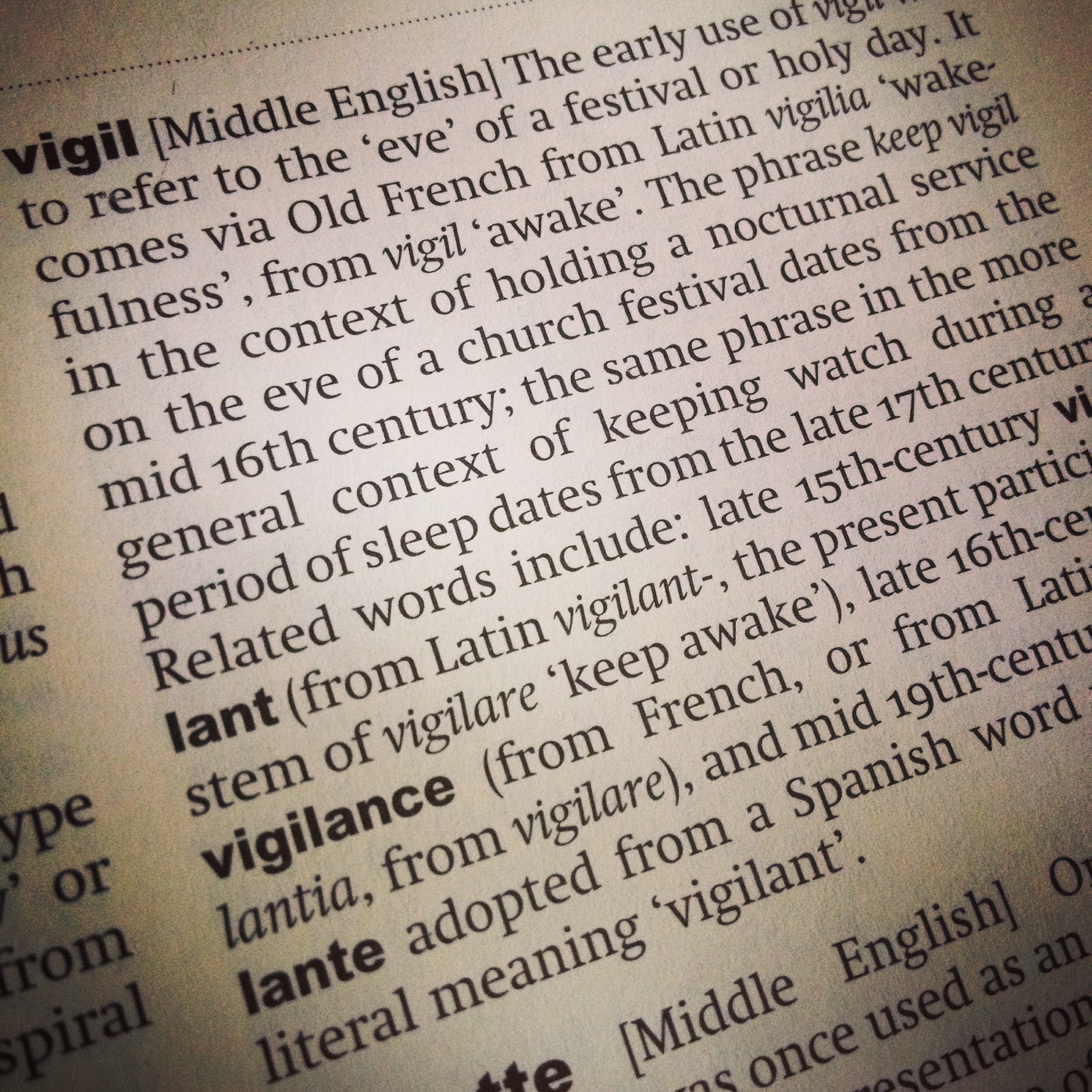
vigilvi-jƏl \ n.  wakefulness; watchfulness; a night of spiritual preparation

——

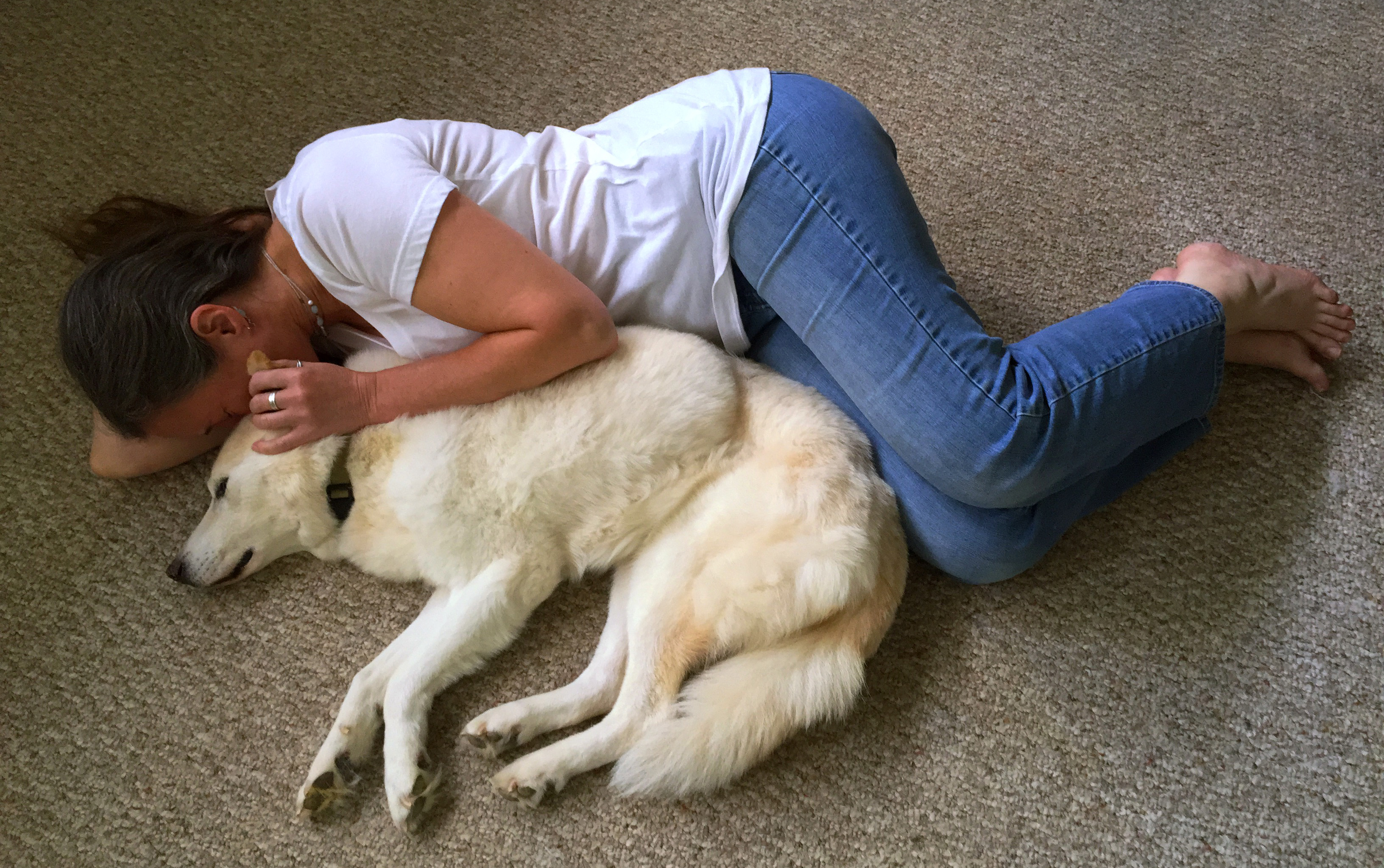
Coyote woke us the other night, crying in her sleep. Bodhi stared intently at her, beaming love from his place on the rug. I spoke soothingly, letting her know we were near, watching over her. She started awake at my voice, dazed, and met my gaze. Unable to hold her head up longer than those few seconds, she flopped back over onto her side and slept.

Later, around 4:00 a.m., I woke again to her crying. This time, she’d struggled from her bed, disoriented, and had nosed herself into a corner of the room. She couldn’t turn to free herself, relying on the wall at her side to keep her upright. Her rear claws scrabbled desperately on the wood floor, pushing her farther into the wall ahead of her, and she cried out in her panic. I turned her around and guided her outside, where she immediately squatted to relieve herself. She stood shaking under the stars before moving one, painstaking step at a time toward the gate, where she’s always loved to stand and look at the world.

I crouched near the door, giving her space but letting her know I hadn’t left her alone. The night was cool as I kept my vigil. It’s almost time, I thought. I anchored myself in the moment, burning it into my memory. I was strangely awake for such an early hour.

When she’d drunk her fill of the view and the breeze, Coyote managed a clumsy turn, and we were suspended there, facing each other in the moonlight, our connection humming between us. I breathed in slowly, waiting for her to signal what she needed next. In answer, she tottered toward me: One. Two. Three halting steps at a time, pausing for long seconds between each small progress, panting and holding the lifeline of my eyes with hers. If I tried to rise to help her, she turned her head in clear refusal. So I honored her dignity and stayed in my crouch, my hand silently outstretched to her, recalling our beginnings, when she crawled across the floor toward that same open hand — terrified then, her new life with me uncertain.

Her life is certain now. We know the direction, and there is no turning back. The days — the hours — are numbered, so very finite.

We have only to wait. Watch. Prepare.

Dictionary page with definition for vigil